 by
by Archaeologists in Turkey uncovered 1,300-year-old loaves of bread, one bearing the image of Jesus and a Greek inscription referencing “the Bread of Life.” The discovery offers rare insight into early Christian worship and belief.
A Stunning Discovery in Ancient Eirenopolis
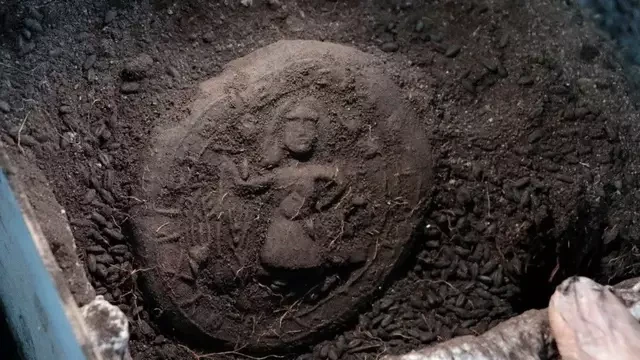
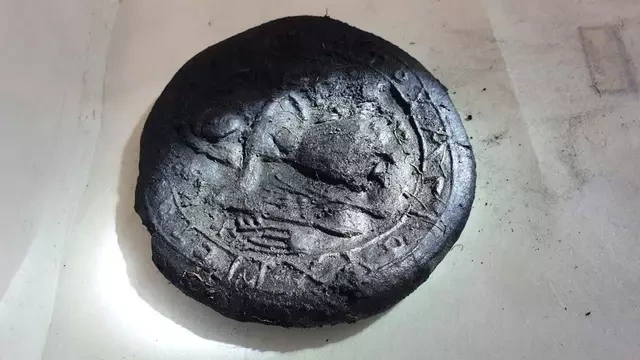
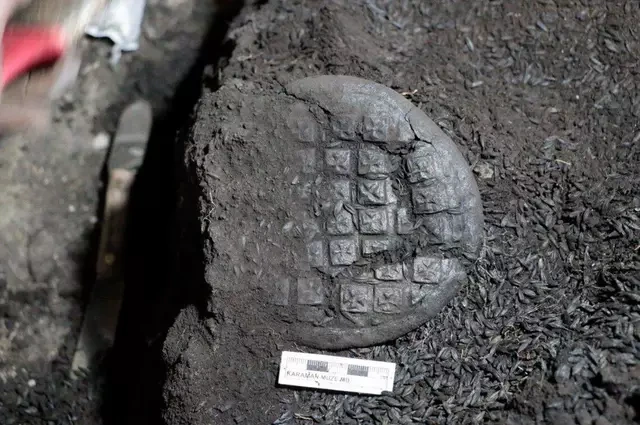
Archaeologists have uncovered a remarkable find at Topraktepe, the site of ancient Eirenopolis in modern-day Turkey. The team discovered five carbonized loaves of bread dating back nearly 1,300 years.
What makes this discovery extraordinary is one loaf’s surface. It bears a portrait of Jesus Christ alongside a Greek inscription that reads:
“With thanksgiving to the Blessed Jesus.”
This phrase directly ties to the famous verse John 6:35, where Jesus says, “I am the bread of life.”
The discovery provides new understanding of how early Christians viewed bread — not just as food, but as something sacred and symbolic of Christ’s body.
Learn more about faith-related discoveries on Viral Sensei’s Ancient Discoveries Hub.
How Fire Preserved the Past
Researchers explained that these loaves survived because of a natural carbonization process. They were exposed to intense heat and low oxygen, which preserved them rather than burning them. This process locked in fine details, leaving the bread astonishingly intact despite the passage of time.
According to archaeologists, these loaves are among the best-preserved early Christian examples ever found in Anatolia, the westernmost part of Asia. (Greek City Times)
Jesus as the Sower: A Rare Image of Faith
What makes this artifact unique is how it portrays Jesus — not as a ruler or teacher, but as a sower, someone planting seeds for harvest.
This depiction ties closely to spiritual teachings about growth, faith, and salvation.
The other four loaves are marked with crosses, suggesting they may have been used in Eucharistic rituals. In early Christian communities, believers would share bread and wine to remember Jesus during the Lord’s Supper.
As noted by Arkeo News, the imagery reinforces how deeply early Christians linked everyday life — like sowing and eating — to their spiritual beliefs.
Symbolism and Faith in Daily Life
To the people of ancient Eirenopolis, bread represented both physical nourishment and divine grace. This belief stemmed directly from the teachings of Jesus.
The Greek inscription on the loaf reflects how Scripture was integrated into daily rituals. Bread was considered holy, an extension of Christ himself. Such artifacts help historians understand how faith shaped communities, especially in regions influenced by the Byzantine Empire.
For more insights on early Christian symbolism and archaeological finds, visit Viral Sensei’s Biblical Archaeology Section.
The Turin Shroud: Another Mysterious Relic
This bread discovery adds to a long line of ancient relics that have inspired both wonder and debate.
One of the most famous is the Turin Shroud, believed by many to be Jesus’ burial cloth. It is displayed at the Cathedral of St. John the Baptist in Turin, Italy.
Originally dated to the 13th or 14th century, new research challenges that timeline. A 2022 study in Heritage Journal used X-ray analysis to re-evaluate the fibers. The findings suggest the shroud could be much older, possibly dating back 2,000 years, aligning with early Christian tradition.
However, researchers caution that this result depends on the shroud being stored under strict, temperature-controlled conditions — something nearly impossible to prove.
You can read the full scientific paper here.
Faith, History, and Evidence
Artifacts like the Topraktepe loaves and the Turin Shroud continue to bridge faith and science. While questions remain, each new discovery helps reconstruct how the early followers of Jesus lived, worshiped, and expressed belief.
The carbonized bread from Eirenopolis offers more than historical curiosity — it stands as a silent witness to how ancient Christians saw divine meaning in their simplest acts.
To explore more findings that connect spirituality and science, check out Viral Sensei’s Faith & History Features.