 by
by You might shrug off a bit of leg discomfort, but in some rare cases, that pain could be whispering something serious: pancreatic cancer.
Pancreatic cancer may only represent about 3% of all cancers in the U.S., but it causes roughly 8% of cancer deaths — making it disproportionately deadly. American Cancer Society+1
In 2025, the American Cancer Society expects around 67,440 new cases (34,950 men, 32,490 women) and 51,980 deaths (27,050 men) from this disease. American Cancer Society
Clots in the Leg: An Unexpected Early Warning Flag
One of the sneakiest early alerts to pancreatic cancer doesn’t show up in your abdomen — it might show up in your leg. Doctors have found that deep vein thrombosis (DVT) — a blood clot in the deep veins, usually in the leg — can precede any gut pain or jaundice.
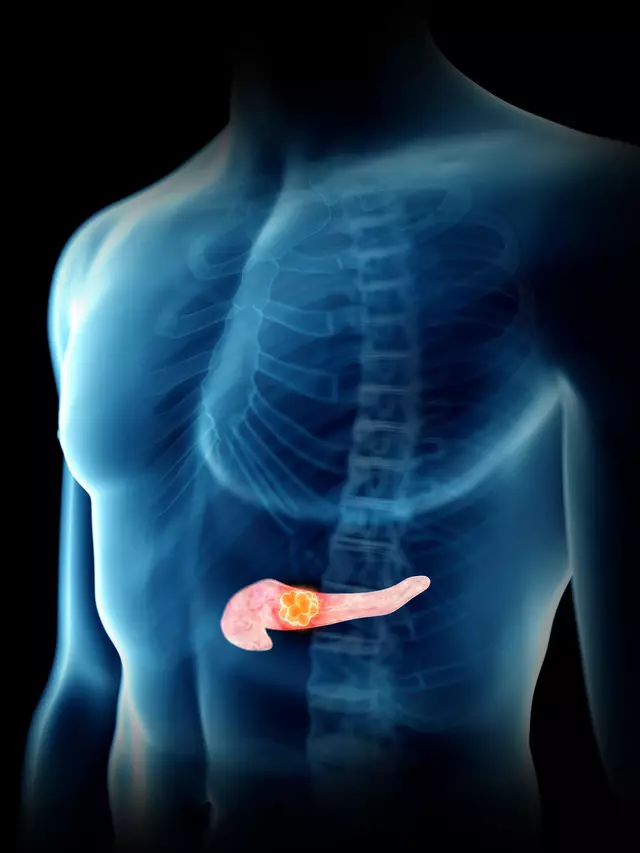
Illustration of a man’s pancreas tumour (Getty stock)
Common symptoms of DVT include:
- Pain or tenderness in the affected leg
- Swelling
- Redness
- Warmth in the skin over the vein
These signs are pretty common and often benign, but if they appear without an obvious cause (like injury or long immobility), they should raise an eyebrow. If a clot breaks off and travels to your lungs, it can cause a pulmonary embolism (PE) — a serious, sometimes life-threatening condition.
Pancreatic cancer ranks among the most thrombogenic (clot-prone) malignancies. Venous thromboembolism (VTE) — the umbrella term that includes DVT and PE — may occur in ~20% of pancreatic cancer patients over the course of their disease. PMC
Some studies suggest up to 41% of pancreatic cancer patients face VTE at some point. BioMed Central
Other Early Signs (and Why They’re Often Missed)
Because the pancreas is tucked away deep in the abdomen, tumors often grow quietly. Here are other red-flag symptoms that often arrive later — but are still worth knowing:

Doctors will undertake an ultrasound to scan your belly in the process of searching for a pancreatic tumor (Getty stock)
- Persistent fatigue or weakness not explained by lifestyle
- Jaundice (yellowing of skin or eyes), from bile duct obstruction
- Dark urine and light, greasy stools
- Itchy skin
- Unexplained weight loss and low appetite
- Abdominal or back pain (especially if constant)
- New-onset diabetes, when pancreatic function is disrupted
- Enlarged liver or gallbladder, if the cancer affects nearby organs
Though each of these can stem from many other causes (gallbladder disease, hepatitis, IBS, etc.), when several occur together — or when clot signs appear out of the blue — medical evaluation is smart.
What You Can Do (Without Panicking)
- Don’t ignore clot symptoms. Especially if they show up without obvious causes (e.g. no recent surgery, injury, or long travel).
- Mention your full health picture. If you’ve had unexplained weight loss, new digestive issues, or recent changes in bathroom habits, tell your doctor.
- Ask about imaging. An abdominal ultrasound or CT scan can sometimes spot pancreatic tumors early.
- Watch risk factors. Smoking, obesity, family history, and chronic pancreatitis all raise cancer risk.
Final Thought
Most leg pain or swelling is benign. But in rare—and far less benign—cases, a blood clot could be the body’s warning sign that something deeper is going on. Pancreatic cancer is often stealthy, so catching it early is tough. But increasing awareness of these subtle signals — like DVT — could help lead to earlier diagnosis and better outcomes.
References & Further Reading
- American Cancer Society — Cancer Facts & Figures, Pancreatic Cancer statistics (internal link) American Cancer Society
- SEER / NIH — Pancreatic Cancer Stat Facts SEER
- PMC — Burden of Venous Thromboembolism in Pancreatic Cancer Patients PMC
- Thrombosis Journal — National Trends in VTE-related Mortality BioMed Central+1