 by
by She settles in and stops eating. Days turn into years. She never leaves.
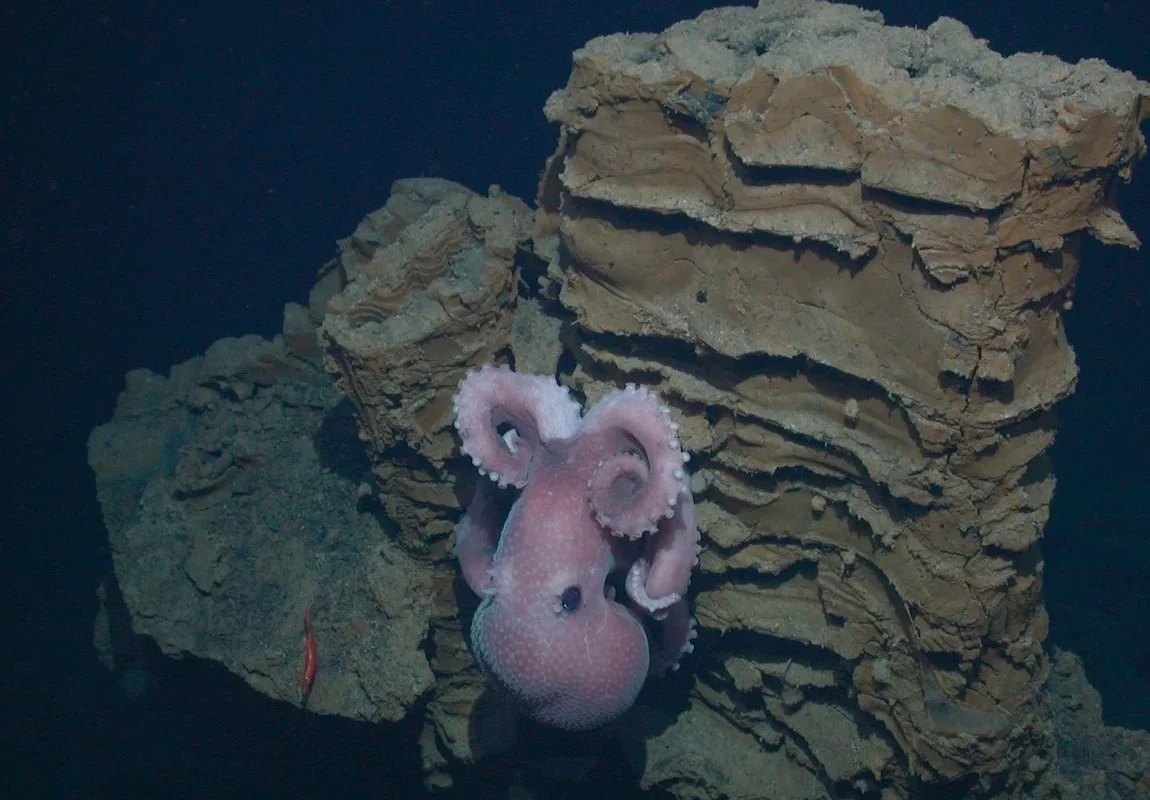
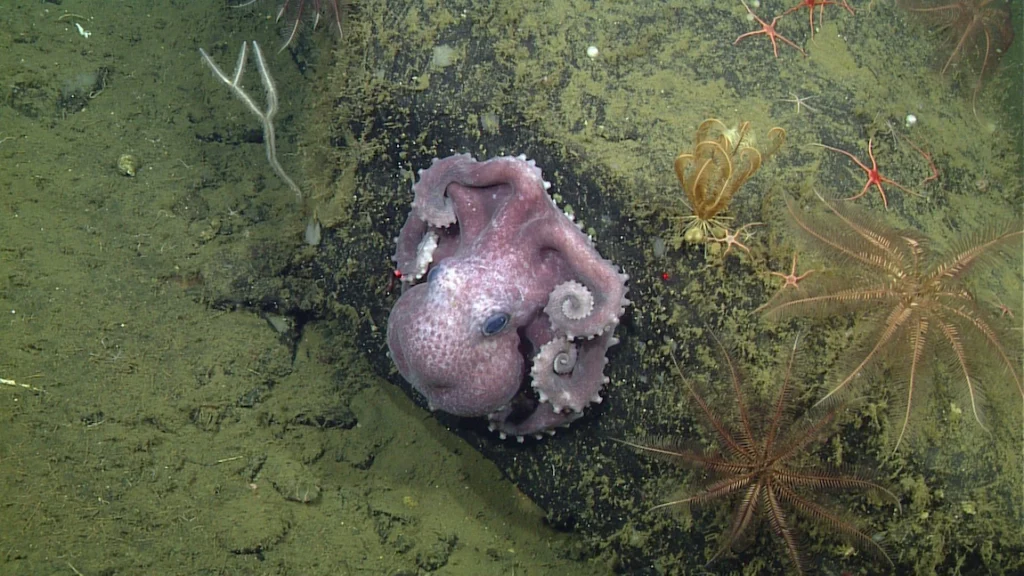
In the frigid depths of Monterey Canyon, a female deep-sea octopus anchors herself to a rock face, enveloping a clutch of eggs. She cleans them, fans them gently with circulating water, and guards them with unwavering devotion. For 53 months—over four years—she stays in near-complete stillness, never hunting, never feeding, focused entirely on one task: protecting her offspring.
When the babies finally hatch, her purpose is fulfilled. She dies soon after.
This remarkable act of devotion is called semelparity—a life strategy where an organism reproduces only once and gives everything to ensure the next generation survives. It’s quiet. It’s haunting. And it’s one of the most selfless stories in the animal kingdom.
The Discovery That Changed Marine Science
In April 2007, researchers from the Monterey Bay Aquarium Research Institute (MBARI) used a remotely operated vehicle (ROV) to explore the Monterey Submarine Canyon, nearly 1,300 meters below the surface. There, they found a lone Graneledone boreopacifica, a species of deep-sea octopus, perched on a rocky ledge.
When the team returned a month later, she was still there—this time guarding a cluster of small, translucent eggs.
Month after month, dive after dive, the scientists observed her.
Over the course of 53 months, researchers confirmed it was the same female, caring for the same eggs. She had not moved. She had not fed. And yet, she remained.
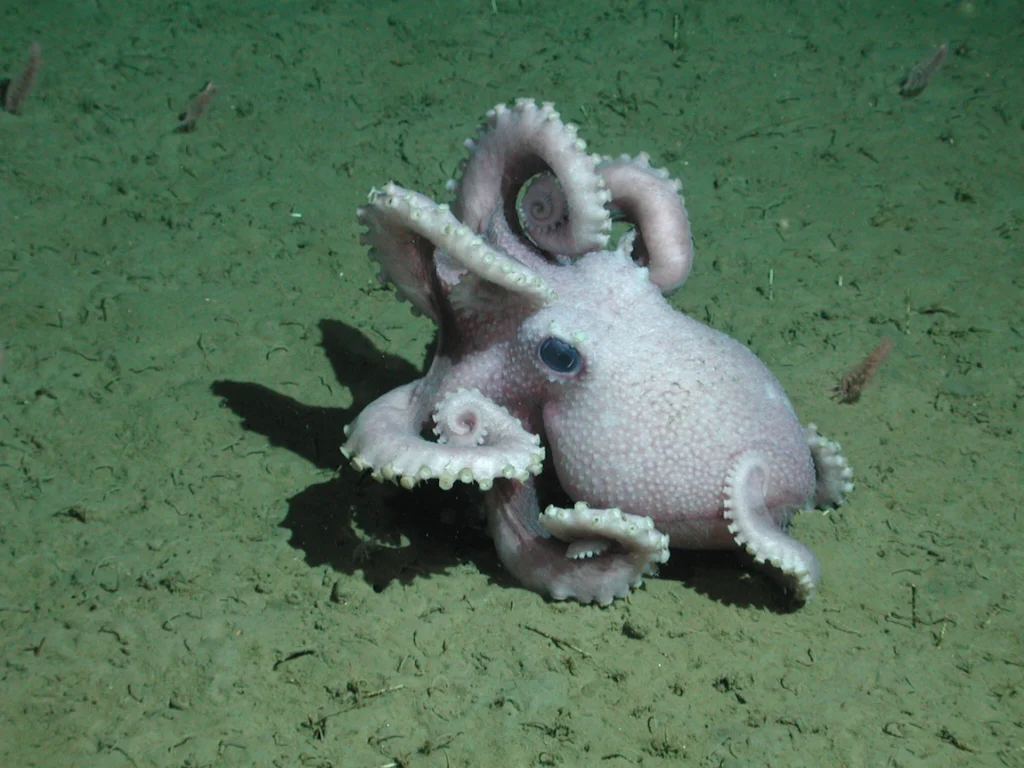
When they returned one final time, the eggs had hatched—and the mother was gone.
This record-breaking observation, published in PLOS ONE, revealed the longest-known egg-brooding period of any animal on Earth.
Understanding Semelparity: Life for One Purpose
Many animals reproduce multiple times during their lives. But some—like Pacific salmon, certain spiders, and octopuses—follow a very different path. This biological phenomenon, called semelparity, means reproducing once and then dying shortly afterward.
For the deep-sea octopus, semelparity is more than instinct—it’s an all-encompassing transformation. Once she lays her eggs, her body stops producing hormones related to feeding and growth. Her metabolism slows. She ignores food completely.
Over time, her muscles waste away, and her skin loses color. Yet she continues to fan her eggs to keep them oxygenated and free of bacteria.
It’s a biological surrender, but one with purpose: to ensure her young emerge strong enough to face the extreme pressures of the deep sea.
The Longest Brooding Period Ever Recorded
Before this discovery, the record for the longest known brooding period belonged to the Emperor Penguin, which incubates its eggs for about two months in Antarctic conditions. The deep-sea octopus shattered that record by years.
Her 53-month vigil is astonishing not only in duration but in what it reveals about survival in the deep ocean.
In the cold, oxygen-rich environment of Monterey Canyon, metabolism slows dramatically. By lowering her energy needs and remaining motionless, the mother octopus conserved just enough energy to last through her watch.
She ignored passing food, even when researchers offered her small pieces of crab through the ROV’s manipulator arm. Her only focus was her eggs—cleaning, fanning, and protecting them until they were ready.
When her hatchlings emerged, they were not larvae but fully formed miniature octopuses—ready to live independently.
The Price of Parenthood
When her young finally drifted into the dark waters, the mother’s vigil ended. She died soon after, her body pale and weightless, sinking to the seafloor.
This act of ultimate devotion highlights an extraordinary truth about life in the deep sea: survival often demands complete sacrifice.
By brooding for years, she ensured her offspring were larger and more capable of surviving without her.
It’s an act both brutal and beautiful—a quiet reminder that love, even in the darkest depths, can take unexpected forms.
“The ultimate sacrifice of the female Graneledone boreopacifica reminds us that nature’s most remarkable acts often go unseen,” said Dr. Bruce Robison of MBARI, lead author of the study.
What This Means for Science
The discovery of the deep-sea octopus’s record-breaking brooding period reshaped scientists’ understanding of marine life strategies and deep-sea adaptation.
According to researchers, this behavior may be an evolutionary response to the harsh conditions of the deep ocean.
By brooding longer, the mother allows embryos to develop more fully, increasing their odds of survival in a world of predators and scarce food.

It also raises new questions about how temperature and environmental change might affect deep-sea species.
If ocean temperatures rise, brooding durations could shorten, potentially reducing hatchling survival rates.
The Ocean’s Quiet Heroine
We often imagine ocean life as a constant race for survival—sharks hunting, fish darting, whales breaching. But this story from the deep reminds us that strength can also look like stillness.
In the silence of Monterey Canyon, one mother octopus spent years holding on, enduring starvation, pressure, and darkness—all for the chance to give life.
Her story is a testament to endurance, selflessness, and the astonishing diversity of life beneath the waves.
Explore more stories like this in the Science section of Viral Sensei.
References
- PLOS ONE: Deep-Sea Octopus (Graneledone boreopacifica) Conducts the Longest-Known Egg-Brooding Period of Any Animal
- MBARI: Deep-Sea Octopus Broods Eggs for Over Four Years—Longer Than Any Known Animal
- National Geographic: Octopus Cares for Her Eggs for 53 Months, Then Dies
- EurekAlert!: Deep-Sea Octopus Broods Eggs for Over Four Years—Longer Than Any Known Animal