 by
by Rogue Planet Cha 1107-7626 Devours Matter at Record Speed, Redefining the Line Between Stars and Planets
Scientists Shocked by Rapidly Growing Rogue Planet
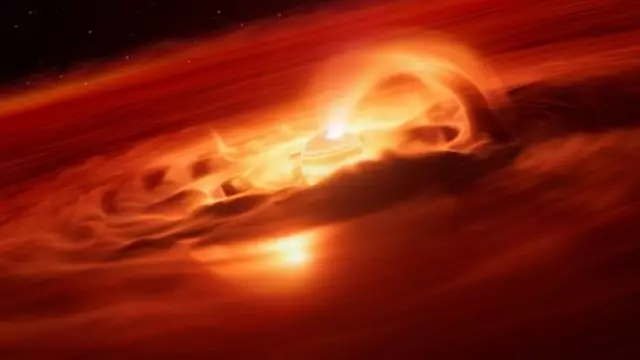
Astronomers are amazed by a rare rogue planet that’s expanding faster than anything ever seen before. The object, called Cha 1107-7626, is located about 620 light-years away in the constellation Chamaeleon. What makes it special is how it’s feeding — not orbiting a star, but devouring nearby gas and dust at a pace of roughly six billion tonnes per second (source).
This discovery, made using the European Southern Observatory’s Very Large Telescope in Chile, has stunned experts and is now detailed in The Astrophysical Journal Letters. The findings reveal that Cha 1107-7626’s growth rate has multiplied eightfold within just a few months — the fastest growth spurt ever recorded in a planetary-mass object.
How Big Is Cha 1107-7626?
Researchers estimate that Cha 1107-7626 is five to ten times more massive than Jupiter — already an enormous planet by any standard. What’s fascinating is that this planet behaves more like a young star: it’s swallowing everything nearby and growing rapidly, driven by a surprisingly powerful magnetic field.
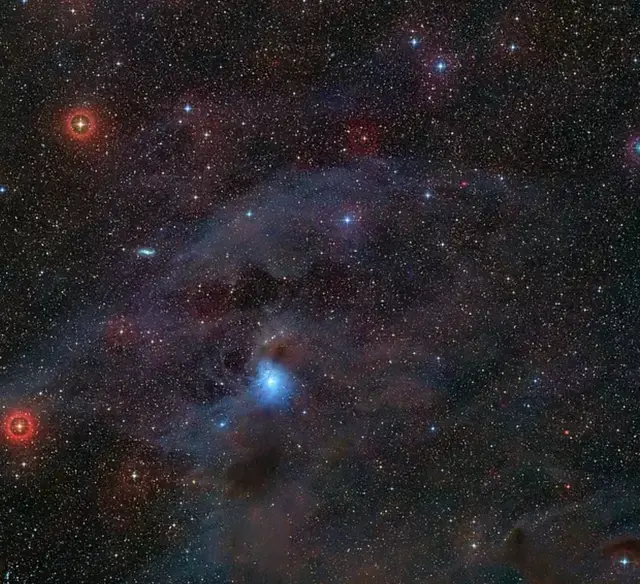
During this feeding frenzy, scientists noticed changes in the planet’s chemical composition. Initially, they detected water vapor, but as it grew, that vapor disappeared — a transformation usually seen in young stars.
Belinda Damian, co-author of the study, explains: “This discovery blurs the line between stars and planets and gives us a rare look at how rogue planets evolve.”
You can learn more about how planets form and grow in our explainer on planetary formation.
Why It’s Called a “Rogue” Planet
Unlike planets in our solar system, rogue planets float freely through space without orbiting a star. These mysterious worlds are often ejected from their original systems or formed in isolation.
Dr. Aleks Scholz, an astronomer at the University of St Andrews and co-author of the study, notes that the origins of rogue planets remain unclear:
“We still don’t know whether they’re the smallest star-like objects or giant planets kicked out of their birth systems.”
For a deeper dive into these mysterious worlds, check out our guide on rogue planets explained.
Star-Like Behavior in a Planetary Body
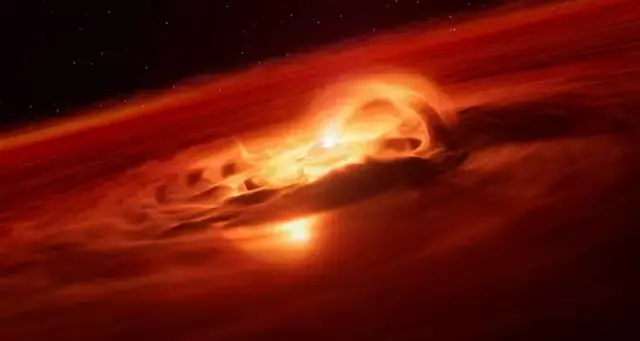
What truly puzzles scientists is that Cha 1107-7626 acts like a young star. It’s experiencing sudden bursts of activity, drawing in matter via magnetically controlled funnels — a process called magnetospheric accretion, more typical of stars.
This strange hybrid behavior has led experts to rethink how planets form and evolve. Could there be a continuum between stars and planets, rather than a clear separation?
To explore how stars and planets might share more similarities than we thought, read our feature: When Stars Behave Like Planets — and Vice Versa.
A Glimpse Into Early Planet Formation
Cha 1107-7626 is only about one to two million years old, a baby by cosmic standards. Its feeding frenzy gives astronomers a window into what early planet formation might look like — chaotic, powerful, and unpredictable.
Dr. Scholz told the Daily Mail that these growth bursts are likely short-lived:
“By the time we can observe them, they’re already near their final size. The most dramatic growth phases probably happen earlier, when they’re still hidden in thick clouds of gas and dust.”
This discovery helps scientists understand what may happen inside the earliest stages of solar system development, something rarely observable.
Read more about early cosmic evolution in our article on how solar systems are born.
The Bigger Picture
Cha 1107-7626’s story challenges our understanding of where planets end and stars begin. As technology advances, future telescopes like the Extremely Large Telescope (ELT) could help astronomers capture more of these “in-between” cosmic objects.
Until then, this rogue planet remains a powerful reminder that the universe is far stranger — and more dynamic — than we ever imagined.
🌠 Related Reads:
- The Most Mysterious Exoplanets Ever Found
- Why Jupiter Is the King of Our Solar System
- How the James Webb Telescope Changes Our View of the Universe
Featured Image Credit: European Southern Observatory