by
by Diane Keaton’s public reflections on skin cancer, bulimia, and her profound resilience.
Diane Keaton’s Health Journey: What She Shared Publicly
The film world is in mourning following the news that Diane Keaton passed away on October 11, 2025, at the age of 79.Wikipedia Fans and fellow artists alike have expressed deep grief over her passing and recalled her frankness about personal challenges.
Keaton’s career spanned decades, and her breakthrough screen role remains her portrayal of Kay Adams (Michael Corleone’s partner) in The Godfather directed by Francis Ford Coppola. Wikipedia She later won the Academy Award for Best Actress for Annie Hall (1977) and received further nominations in 1982, 1997, and 2004. Wikipedia
Because Keaton kept her final health condition private, the official cause of her death has not been publicly disclosed. AP News Below is a summary of the health issues she did discuss publicly—with care to rely only on verified sources.
Skin Cancer: A Familial Pattern
As far back as 2015, Keaton told the Los Angeles Times that skin cancer ran in her family: her aunt Martha had a severe case (leading to nose removal), and both her father and brother had basal cell carcinoma. SurvivorNet She reflected:
“It’s a family history … My father had basal skin cancer and my brother had it. … That’s why you’ve got to put the sunblock on.” SurvivorNet
She admitted that in her 20s she neglected sun protection:
“Back in my 20s I didn’t pay attention much … I didn’t research and didn’t really care … I didn’t start sun care until my 40s.” SurvivorNet
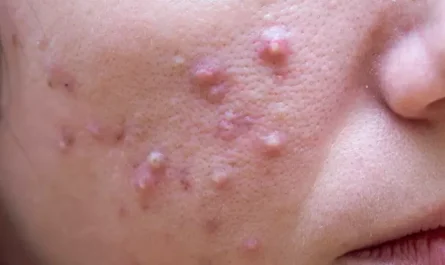
Over her life, Keaton faced basal cell carcinoma and later developed squamous cell carcinoma, undergoing surgeries to remove affected tissue. SurvivorNet
Medical commentators note that basal and squamous cell skin cancers are among the most common skin cancers and typically have good prognosis if caught early. SurvivorNet Her candor helped spotlight the importance of sun protection and early detection.

Struggles with Bulimia: A Private Battle
In addition to her struggles with skin health, Keaton was open about her long battle with bulimia. She said that at times she would consume huge amounts of food and then purge. Some days she claimed to reach 20,000 calories in a binge. (Vanity Fair) One of her retrospective descriptions:
“Typical dinner was a bucket of chicken, several orders of fries with blue cheese and ketchup, a couple TV dinners … pounds of candy, a whole cake and three banana cream pies.” (Vanity Fair)
Eventually, she recognized the seriousness of her behavior. She sought mental health support, consulting with a psychoanalyst “five days a week.” (Vanity Fair)
Her willingness to discuss eating disorders publicly is rare among stars of her generation, and it helped reduce stigma by showing that such struggles can affect anyone.
Final Months & Public Farewell
Those close to Keaton have said that her health declined quite suddenly in recent months. (People.com) In fact, she listed her longtime Brentwood home for sale, a move seen by many as a signal of major life changes. (People.com) Her close friend Carole Bayer Sager noted that she had become very thin just weeks before her death. (People.com)
In one of her final Instagram posts, Keaton shared a photo of herself with her beloved Golden Retriever, Reggie. The caption (in collaboration with home décor brand Hudson Grace) read:
“Proof our pets have great taste too! Happy National Pet Day from HG & @diane_keaton.”
While not explicitly health-related, this post gave fans one of the last glimpses of her affectionate, personal side.
Legacy of Openness & Resilience
Though Diane Keaton did not reveal the details of her final illness, her past openness about skin cancer and bulimia shapes part of her legacy. She showed that even in glamour, celebrities face real health challenges—and that speaking about them can inspire awareness, prevention, and empathy.
Her life’s work as an actor, author, photographer, and public figure will endure. But the health battles she shared with courage are among the more personal chapters that resonate deeply.
Featured Image Credit: Getty Images/Rodin Eckenroth