 by
by NASA Plans Moon Cities Under Transparent Domes Using Lunar Glass
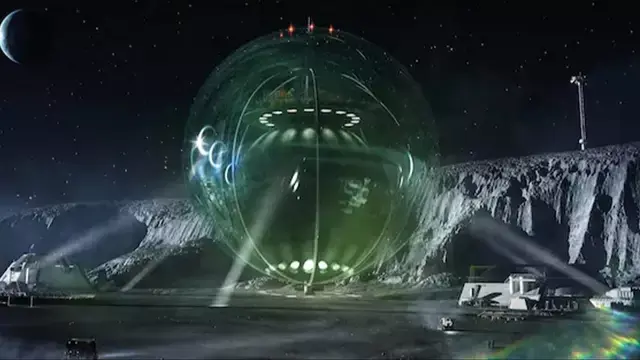
NASA is backing a novel project to build lunar habitats made from “lunar glass” using moon dust. The goal: interconnected cities under glass domes. Learn how the idea works and its challenges.
NASA’s Vision: Living Under Glass Domes on the Moon
NASA is backing a bold, futuristic plan to one day house people on the Moon inside vast glass domes made from lunar soil.
While space travel hasn’t had a huge leap recently, breakthroughs in habitat design show the future of exploration is bright. What once seemed like science fiction may be closer than we think.
According to NASA, the effort is part of their Lunar Glass Structure (LUNGS) project. (NASA) The goal: make large, monolithic glass shells using lunar regolith — the dusty mix of minerals covering the Moon’s surface. (NASA)
How the Glass Domes Would Be Built
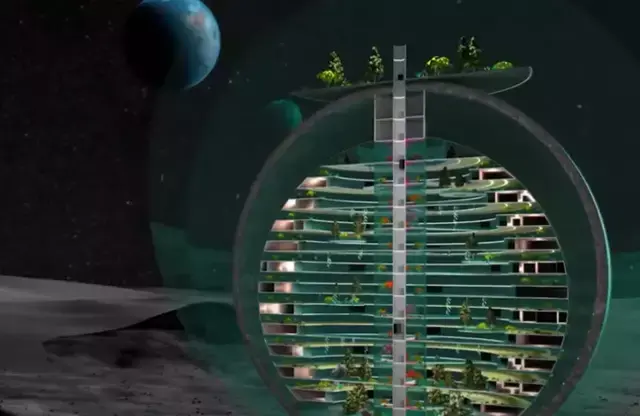
The concept is led by Skyeports LLC, under architect Martin Bermudez. (Josh Simpson Glass) Bermudez envisions whole lunar “cities” joined by glass domes. (NASA) He believes these habitats might even someday be built in orbit. (NASA)
The basic method goes like this:
- Collect regolith from the Moon’s surface.
- Feed it into a microwave furnace that melts it to a molten glass-like material. (NASA)
- Blow or inflate this molten glass into a hollow sphere or dome structure. (NASA)
- Use smart polymers or embedded materials so the glass can “self-heal” microcracks and endure the harsh lunar environment. (NASA)
Because the Moon has extremely low atmospheric pressure and lower gravity, the process of inflating a bubble is easier than on Earth. (Universe Today) Bermudez proposes filling the dome initially with an inert gas like argon (shipped from Earth) to aid the process. (Universe Today)
The spherical design helps spread stress evenly, which makes it more resilient to temperature swings, micrometeorites, and radiation. (NASA) Multiple glass layers, with argon between them, and an outer spinning shell could add extra protection. (Universe Today)
Challenges and Next Steps
Not everything is solved. Some key challenges:
- Brittleness: Ordinary glass is fragile, so researchers must adapt it to survive the Moon’s conditions. (Josh Simpson Glass)
- Scale & manufacture: These domes must be blown in place — transporting prefabricated modules from Earth is impractical. (NASA)
- Self-healing & durability: The domes must resist radiation, temperature extremes, and small impacts over long periods. (NASA)
- Structural verification: The concept is still in early phases. Tests are needed to replicate the lunar vacuum, temperature cycles, and stress conditions. (NASA)
Still, NASA has awarded a Phase I NIHAC grant to explore feasibility. (Universe Today) As part of that, they’re studying how lunar glass behaves (melting point, expansion, strength) and how to inflate it into large hollow shells. (Josh Simpson Glass)
If successful, this could be a major leap forward in building sustainable habitats on the Moon and beyond. The idea also aligns with broader plans to use in-situ resource utilization (ISRU): using local materials rather than hauling everything from Earth. (Phys.org)
For more insights into space and future technology, check out related articles on ViralSensei (for example, our deep dive into lunar base concepts).