 by
by When you imagine getting older, wrinkles, grey hairs, maybe moving a little slower might come to mind. But for Gerard McAliece, a 68-year-old grandad from Kilmacolm, Scotland, ageing brought something much more dramatic: a nose that just wouldn’t stop growing.
A Growth He Tried to Ignore
About six years ago, Gerard noticed small changes in his nose. At first, he thought it was just part of getting older. But year after year, the growth got more obvious. He said: “It just kept growing and growing…” UNILAD
People started staring. Some would look away. But Gerard held onto his dignity: “this is me. Take me as I am.” Yet the nose got so large it hung over his mouth, making eating, drinking, even kissing his wife, Carol, a daily struggle. UNILAD
The Diagnosis: Rhinophyma
Eventually doctors diagnosed Gerard with Rhinophyma, a rare condition where the sebaceous glands (oil glands) and connective tissue in the nose overgrow. This causes swelling, skin thickening, and disfigurement. UNILAD+1
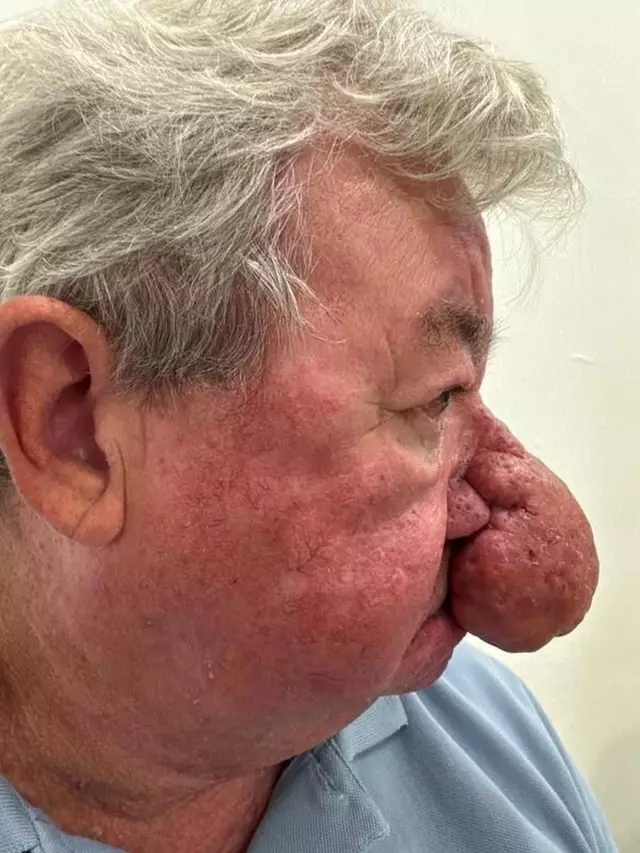
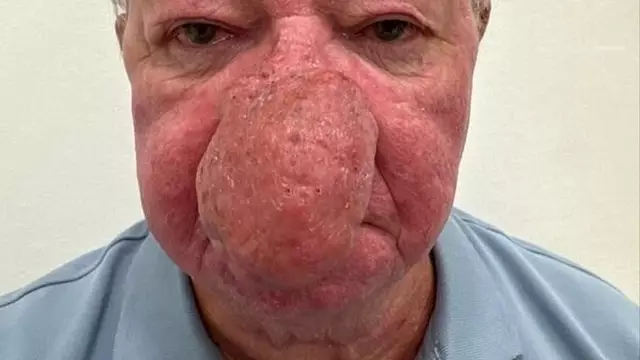
Gerard pictured before his surgery, when his nose growth had taken over his life (Kennedy News and Media/Ever Clinic)
He first tried the NHS route, but was told surgery was cosmetic, not medical, because he could still breathe through his nose, so there was “no urgency.” Gerard didn’t push the issue. His wife Carol, however, knew things had gone too far. UNILAD
Stepping In: Surgery That Changed Everything
Carol found Ever Clinic in Glasgow, known for handling severe Rhinophyma cases. Gerard met their team, who were shocked by how large the growth had become—but also confident they could help. UNILAD+1
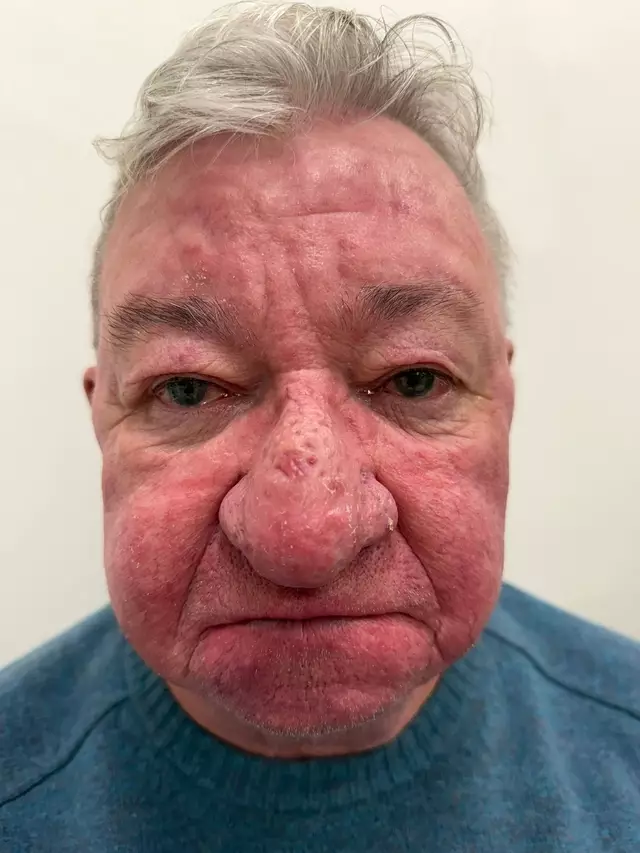
After the life changing operation, Gerard says he finally feels like himself again (Kennedy News and Media/Ever Clinic)
Dr. Cormac Convery led the operation. It took about four hours, removing the excess tissue and reshaping Gerard’s nose in one session. It was “the biggest job” the clinic had ever taken on. UNILAD+1
Life After Surgery
The transformation was more than cosmetic—it changed Gerard’s life. He says he now feels like himself again. Carol says he’s “back to being the man I used to be.” They can enjoy meals out, a pint at the pub, talking to neighbours, all the things that had slipped away. UNILAD
And for Gerard, there’s a message: If you’re suffering, don’t wait. Seek help. Whether someone sees your condition as medical or cosmetic, your comfort, dignity, and daily life count. UNILAD
What You Should Know About Rhinophyma
- Symptoms: Bulbous, thickened skin on the nose; redness; enlarged oil glands; sometimes difficulty eating or speaking if it’s extreme.
- Causes: Often linked with rosacea, chronic inflammation, genetic predisposition. Exact causes aren’t always clear.
- Treatment options: Surgery is usually the go-to for severe cases. Techniques include scalpel excision, electrocautery, laser treatments. Early intervention helps avoid extreme growth. (For more on treatment comparisons, see studies like “Large Rhinophyma Treated by Surgical Excision and Electrocautery” and “Treatment of Rhinophyma with Fractional CO₂ Laser.”) PubMed+2PubMed+2
Gerard’s story shows how hard it is to admit something’s gone beyond “just ageing,” and how powerful it can be when surgery restores not just appearance—but confidence, relationships, and joy. If you ever notice growing thickening, pain, or functional issues with your nose, it’s worth talking to a specialist. Don’t wait until it becomes hanging over your life—literally.
References & Further Reading
- For medical info on Rhinophyma and surgical treatment methods: “Large Rhinophyma Treated by Surgical Excision and Electrocautery” PubMed
- On laser and combined treatment approaches, see Treatment of Rhinophyma: Combined Surgical Treatment and Quality of Life PubMed
- Gerard’s own story was covered by UNILAD and Daily Express. UNILAD+2Daily Express US+2