 by
by The Real Reason Why No Skeletons Have Ever Been Found in the Titanic Wreck
When the RMS Titanic sank in 1912, more than 1,500 lives were lost. Yet, despite decades of exploration, no human remains or skeletons have ever been found at the wreck site. How could that be, given the catastrophic loss of life? The answer lies in deep-sea science, ocean chemistry, and the passage of time.
The Titanic’s Grave Lies in the Deep
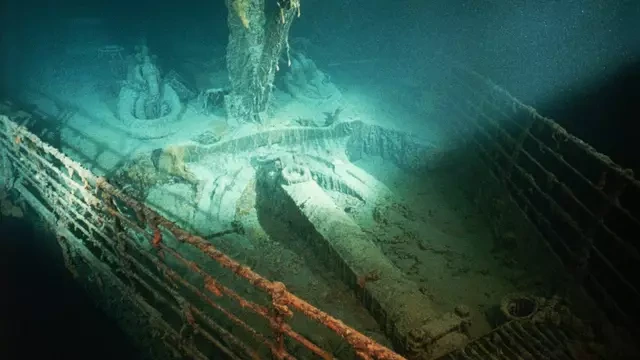
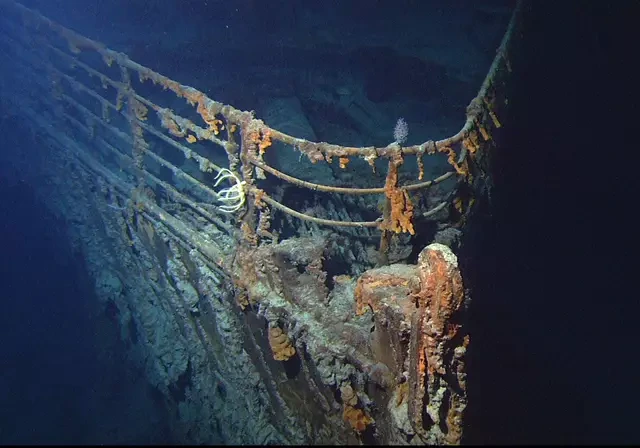
The Titanic rests in two major sections about 12,500 feet (3,800 meters) below the surface, roughly 325 nautical miles southeast of Newfoundland. (IFLScience)
Over the years, expeditions—including many by James Cameron—have documented artifacts such as clothing, shoes, and personal items inside the wreck. But bones or skeletons have never been observed. Cameron himself said, “We’ve seen clothing. We’ve seen pairs of shoes, which would strongly suggest there was a body there at one point. But we’ve never seen any human remains.” (IFLScience)
So, where did all the remains go?
How Deep-Sea Conditions Erase Human Skeletons
1. Biology and Scavengers Do Their Work
Once bodies entered the wreck or sank to the seabed, marine life and bacteria acted quickly. Soft tissues decompose or are consumed by deep-sea organisms, leaving behind bones temporarily. (faithpanda.com)
However, unlike in shallower waters, the bones at such depth don’t remain intact indefinitely due to chemical conditions of the deep ocean.
2. The Role of the Calcium Carbonate Compensation Depth (CCD)
One of the key scientific reasons no skeletons remain is that the Titanic lies below the calcium carbonate compensation depth. Deep-sea explorer Robert Ballard explained that at depths below approximately 3,000 feet (around 914 meters), seawater becomes undersaturated in calcium carbonate, the main component of bone material. (IFLScience)
Once soft tissues are removed by scavengers, the exposed bones slowly dissolve chemically in the deep ocean environment. Ballard stated:
“On the Titanic … once the critters eat their flesh and expose the bones, the bones dissolve.” (IFLScience)
The physics behind this relates to how carbonate minerals behave under pressure, temperature, and ionic concentrations at deep-ocean depths. (For a deeper dive, see the Wikipedia entry on carbonate compensation depth.) (Wikipedia)
In simple terms, at those depths, bones no longer remain stable—they gradually break down into dissolved minerals over decades to centuries.
3. Evidence From Experiments
To test what happens in similar deep-sea conditions, scientists have placed pig carcasses (roughly human-sized) on the ocean floor. Within four days, soft tissues were largely gone; over six months, even the bones vanished. This experimental result aligns with the disappearance of human skeletons from the Titanic wreck over more than a century. (IFLScience)
Thus, after over 100 years, it is unsurprising that no bones remain at the Titanic site.
Why Some Items Still Survive
While bones dissolve, shoes, clothing, metals, and ceramics often survive because they resist the same chemical erosion. Investigators have found many pairs of shoes inside the wreck, sometimes still laced, as silent evidence of the lives once aboard. (IFLScience)
These artifacts provide emotional and historical connection—even without human remains.
Could Some Bodies Be Preserved in Sealed Areas?
Some scientists speculate that sealed compartments or enclosed sections of the ship—where scavengers can’t reach—might hold preserved remains. In those lower-oxygen, static environments, decomposition is slower, and bones might survive longer. (Daily Galaxy)
However, after more than a century underwater, even those areas are unlikely to hold recognizable skeletons.
Final Thoughts
The Titanic’s tragic past continues to captivate us. That no skeletons remain is not due to lack of exploration—it’s because the deep ocean itself dismantles them over time. Through a blend of biology, chemistry, and pressure, the sea has reclaimed what was once human.
Yet, through artifacts and stories, the souls aboard are still remembered.