 by
by North West, the 12-year-old daughter of Kim Kardashian and Kanye West, recently showed off a dermal piercing on her finger—and the internet instantly lit up. While piercings aren’t new territory for teens, this particular style has raised eyebrows because of how it’s placed under the skin.
The reaction has been a mix of curiosity, concern, and conversation around safety. With a doctor now weighing in on the risks, many parents are wondering: Are dermal piercings safe for young teens?
This article breaks down what happened, what experts say, and why placement matters more than age when it comes to these types of piercings.
What Is a Dermal Piercing?
A dermal piercing—sometimes called a microdermal—is different from traditional piercings. Instead of passing through the skin, it involves a small anchor inserted beneath the skin’s surface, leaving a decorative end visible on top.
Dermal piercings can be placed almost anywhere, but when located on the fingers, they come with added complications. According to the American Academy of Dermatology (AAD), piercings that disrupt deeper layers of skin may carry higher risks of irritation and infection.
For reference on similar lifestyle and celebrity stories, readers often enjoy articles like
- Travis Scott’s Surprising Concert Mishap Stuns Fans
- Olivia Rodrigo’s Unexpected Reaction to Viral Fan Moment
Why North West’s Piercing Sparked Concern
When North revealed her dermal piercing on TikTok, many viewers were shocked—not because dermal piercings are uncommon, but because of the placement and her age.
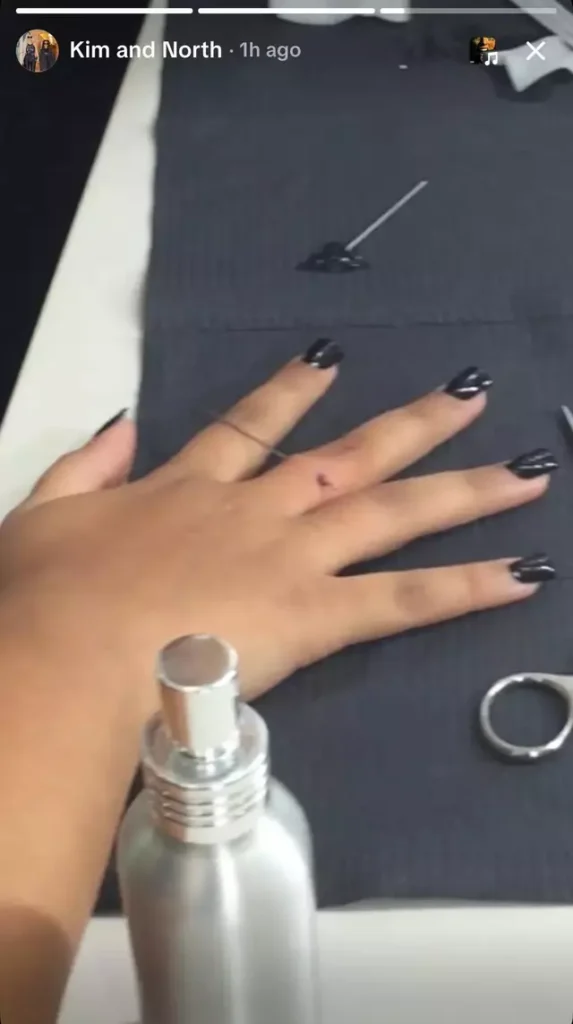
Many commenters thought North was too young for a dermal piercing (TikTok/@kimandnorth)
Comments ranged from supportive to hesitant:
- “I get ear piercings, but this is actually crazy.”
- “Let children be children!”
Kim Kardashian responded simply: “It’s okay.”
But the public’s concern opened the door for medical professionals to weigh in, and their insights highlight risks that apply to anyone considering this type of piercing.
What a Doctor Says About the Risks
Speaking to UNILAD, Dr. Donald Grant, GP and Senior Clinical Advisor at The Independent Pharmacy, noted that dermal piercings on the finger can be particularly risky due to daily hand use.
Here are some of the key concerns he and other experts point out:
1. Easier to Irritate or Reject
The constant motion of fingers can disrupt the healing process. According to Cleveland Clinic, irritation is common in piercings placed in areas prone to friction.
2. Infection Risk Is Higher
Because hands come in contact with bacteria frequently, even small breaks in skin can allow infection to develop. Common signs include:
- redness
- swelling
- unusual warmth
- discharge
The CDC notes that any wound or break in the skin can become infected if not properly cared for.
3. Snagging or Pulling Is More Likely
Finger piercings are vulnerable to getting caught on clothing, hair, or even during normal activities like writing or using a phone.
4. Healing Time Can Be Longer
Frequent handwashing—important for hygiene—may disrupt the healing process. Harvard Health has explained in similar contexts that moisture and friction can slow wound recovery.
These concerns don’t mean dermal piercings are unsafe across the board, but placement plays a major role in outcomes.
Is Age a Factor in Piercing Safety?
Interestingly, the doctor emphasized that younger skin isn’t automatically at higher risk for rejection or complications. Instead, the main factors include:
- quality of jewelry
- expertise of the piercer
- how well aftercare is followed
- location of the piercing
Professional piercing organizations like the Association of Professional Piercers (APP) stress the importance of sterile techniques and choosing reputable studios, no matter the age of the client.
For readers following other celebrity-style discussions, you may also enjoy:
- Selena Gomez Opens Up About a Viral Moment Fans Misinterpreted
- Taylor Swift’s Fan Encounter Goes Viral for an Unexpected Reason
What Parents Should Keep in Mind
Whether it’s a dermal piercing or a standard ear piercing, experts recommend that parents:
✔ Choose a licensed, reputable piercer
Check whether they follow APP or local health guidelines.
✔ Ask about jewelry materials
Titanium or implant-grade steel is often recommended to reduce irritation.
✔ Understand aftercare
Daily cleaning and preventing bumps or irritation are essential.
✔ Watch for warning signs
Seek professional help if redness, swelling, pain, or movement of the anchor occurs.
According to the NHS, early evaluation can prevent more serious complications.
The Bigger Conversation Around Teen Self-Expression
North West has always been fashion-forward, often experimenting with bold makeup, outfits, and accessories. For many young people, piercings are just another form of self-expression.

Despite being just 12, North West is very experimental when it comes to fashion and style (TikTok/@kimandnorth)
The online debate highlights a larger discussion many parents face: balancing safety with individuality. While reactions can be strong, experts encourage parents to stay informed, communicate openly, and prioritize safe choices.
If you enjoy culturally relevant stories like this, check out:
Conclusion
North West’s dermal piercing has certainly stirred conversation, but much of the concern comes down to placement and care—not age alone. Experts say that dermal piercings on the fingers require extra caution due to constant movement and exposure to bacteria.
For parents, staying informed and working with experienced professionals is key when a child or teen wants any body modification. As always, monitoring aftercare and knowing when to seek help can make all the difference.
External Sources
- Centers for Disease Control and Prevention (CDC): https://www.cdc.gov
- Cleveland Clinic: https://my.clevelandclinic.org
- American Academy of Dermatology (AAD): https://www.aad.org
- Harvard Health Publishing: https://www.health.harvard.edu
- UK National Health Service (NHS): https://www.nhs.uk
Disclaimer
This article is for informational purposes only and does not constitute professional advice. Always consult a qualified expert or healthcare professional before making decisions related to medical or personal care.