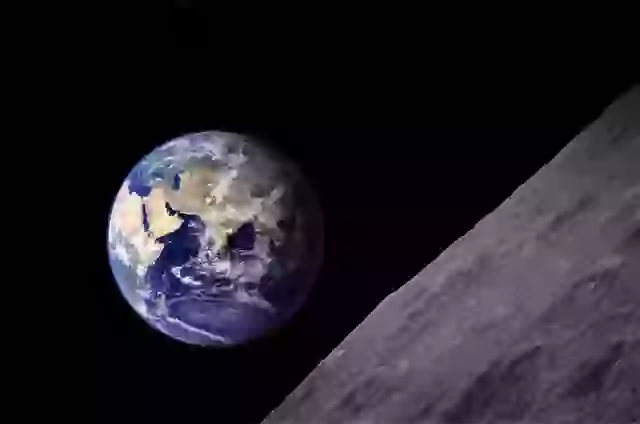
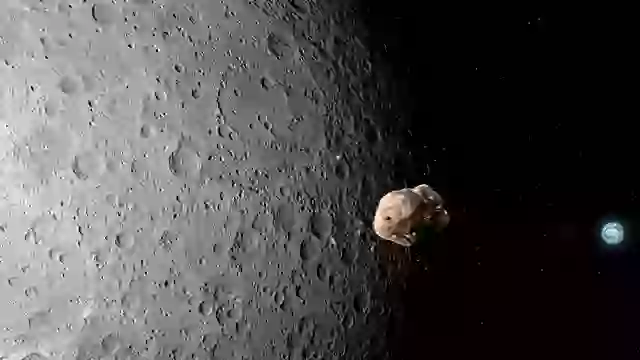
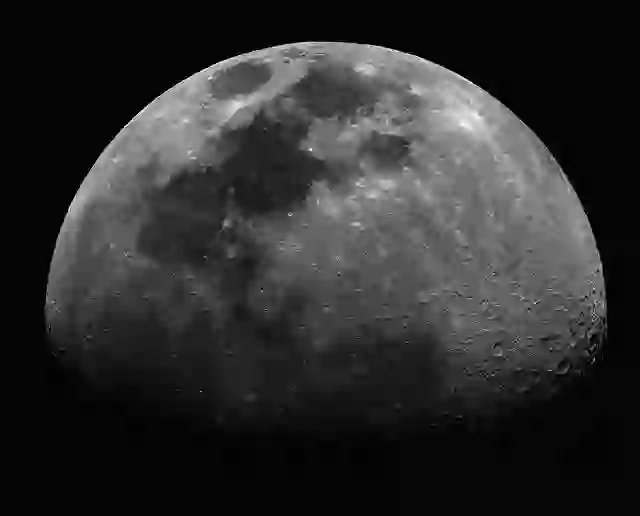
We’ve always been told Earth has just one moon. But what if we told you that at any given moment, there might be six tiny moons quietly zipping around our planet? 🛰️
Meet the “minimoons” — small space rocks or moon fragments temporarily captured by Earth’s gravity. These aren’t like our familiar full-sized Moon. They’re more like cosmic hitchhikers, only staying for a short orbit or two before heading back out into space.
🌕 What Exactly Is a Minimoon?
A minimoon is typically a small asteroid or lunar fragment that briefly gets pulled into Earth’s orbit. These little guys are hard to spot — they’re fast, small, and don’t stick around for long. Most minimoons only stay for around nine months before gravity flings them back into orbit around the Sun.
According to a recent study published in Icarus Journal, Earth might have an average of 6.5 minimoons circling it at any time. The catch? They’re really tough to detect.
Scientists have discovered that Earth could have at least six minimoons (Getty Stock Photo)
“It’s kind of like a square dance,” explains Robert Jedicke, a researcher at the University of Hawaii, in an interview with Space.com. “Partners change regularly and sometimes leave the dance floor for a while.”
🪨 Where Do These Minimoons Come From?
Some minimoons are asteroids from space, but others may actually be fragments chipped off the Moon itself. When space debris crashes into the Moon, it can send pieces flying. Most of those fragments drift toward the Sun, but a few get caught in Earth’s gravitational pull, becoming temporary moons.
Jedicke and his team set out to calculate how many lunar minimoons exist (Getty Stock Photo)
🔭 Why Are They So Hard to Spot?
It’s all about size and speed. These objects are often no bigger than a microwave, which means they must be very close to Earth to be visible through telescopes. But when they’re close, they move across the sky too quickly for easy tracking.
A minimoon is a small asteroid (Getty Stock Photo)
“It is incredible that modern telescopic surveys have the ability to detect such small objects up to millions of kilometers away,” Jedicke said.
🌑 Remember 2024-PT5?
In 2024, a small object named 2024-PT5 was briefly captured by Earth’s gravity. It came from the Arjuna asteroid group, a cluster of space rocks with orbits similar to Earth’s. According to Professor Carlos de la Fuente Marcos, these asteroids occasionally swing close enough to get caught — but only temporarily.
📅 2024-PT5 isn’t expected to return until 2055, making its recent visit all the more exciting.
ViralSensei uses cookies and similar technologies to improve site performance, understand visitor activity, personalize content, and support relevant advertising. By clicking Accept, you agree to our use of cookies and advertising technologies as described in our Privacy Policy.
Functional
Always active
These cookies help the website work properly and remember basic choices you make, such as page settings, display preferences, and security-related features. They improve your experience without collecting unnecessary information.
Preferences
These cookies allow ViralSensei to remember your preferences, such as language, layout, and browsing choices, so your visit feels smoother and more personalized.
Statistics
These cookies help us understand how visitors use ViralSensei, including which pages are viewed, how users move around the site, and what content performs best. This helps us improve website quality and user experience.The technical storage or access that is used exclusively for anonymous statistical purposes. Without a subpoena, voluntary compliance on the part of your Internet Service Provider, or additional records from a third party, information stored or retrieved for this purpose alone cannot usually be used to identify you.
Marketing
These cookies may be used to support advertising, measure ad performance, and help show more relevant ads and content. They may also help advertising partners understand how visitors interact with the website and ads.
 by
by