 by
by For most people, a trip to the dentist doesn’t involve getting your eyesight back—but for 75-year-old Gail Lane, it did.
After losing her vision a decade ago due to an autoimmune disorder that scarred her corneas, Gail had accepted life in darkness. But in a first for Canada, she became one of only a handful of people to undergo a groundbreaking surgery called osteoodonto-keratoprosthesis—or as it’s more catchily known, tooth-in-eye surgery.
The result? For the first time in 10 years, Gail can see light, colours, and even her beloved black Labrador, Piper—whom she’d never seen before.
“I can see lots of colour and I can see outside now. The trees, the grass, flowers… it’s wonderful,” Gail told CBC News.
A Love Story and a First Glimpse
Gail’s regained vision has been emotional for another reason—she’s now starting to see the facial features of her partner for the first time. The couple met after she lost her sight, so until now, she’d only known his face through touch and imagination.
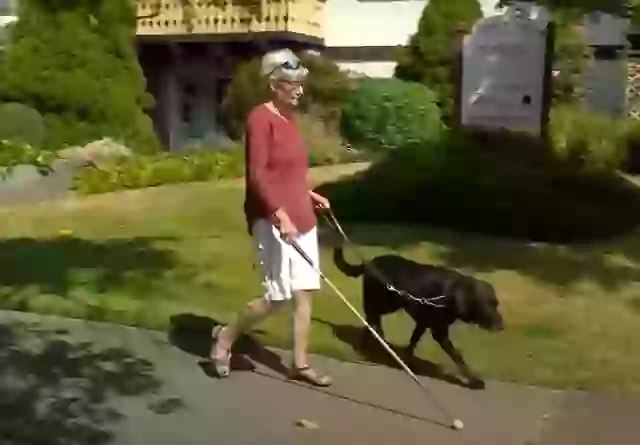
Gail Lane had never seen her dog Piper prior to the surgery (YouTube/Global News)
She’s still adjusting, but she’s hopeful for more independence. “I’m looking forward to taking short walks without always needing someone’s arm. I just have to be patient while my brain adjusts,” she shared.
How ‘Tooth-in-Eye’ Surgery Works
The genius behind Gail’s restored sight is Dr. Greg Moloney of Mount Saint Joseph Hospital in Vancouver, who has performed the complex surgery in two stages:
- The Tooth Stage: A tooth is removed from the patient and implanted into their cheek for several months. This allows strong connective tissue to grow around it.
- The Eye Stage: The tooth is removed again, fitted with a tiny lens, and stitched into the patient’s eye socket using that tough connective tissue.
The tooth acts as a sturdy anchor for the lens—strong enough to hold the artificial cornea and safe from the body’s rejection.
Dr. Moloney admits it’s “a strange operation,” but the science behind it is solid. You can read more about this rare procedure in medical journals here.
The Road Ahead
Six months post-surgery, Gail’s vision isn’t perfect yet, but she’s making remarkable progress. She’s even getting a new pair of glasses soon, hoping to see her own reflection for the first time in years.
“It’s been a long wait,” Gail said, “but well worth it.”
Lane pictured when she could see prior to the auto-immune disorder, decades ago with her daughter (YouTube/Global News)
From never seeing her dog wag his tail to watching flowers sway in the breeze, Gail’s story proves that science—and a little bit of dental work—can truly change lives.
If you want to learn more about rare vision-restoring surgeries and other medical breakthroughs, visit the Canadian Ophthalmological Society.