 by
by When your fingertips start looking odd—like they’ve puffed out, become shiny, or your nails bend downward—it’s easy to brush it off as a weird quirk. But that strange change might be nail clubbing (also called digital clubbing) — and in many cases, it’s a clue that something more serious could be going on.
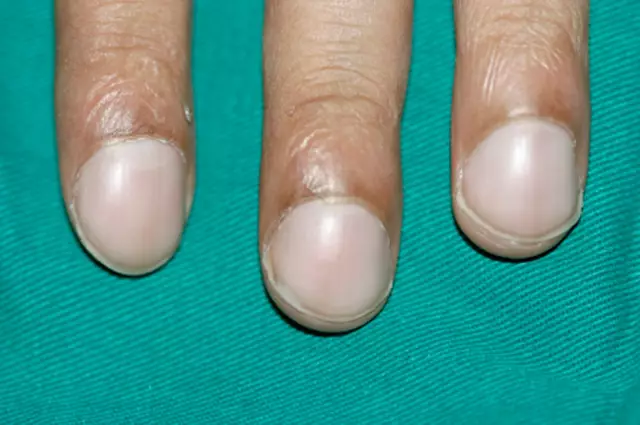
What nail clubbing can look like (Dr Murlidhar Rajagopalan)
What Does Nail Clubbing Look & Feel Like?
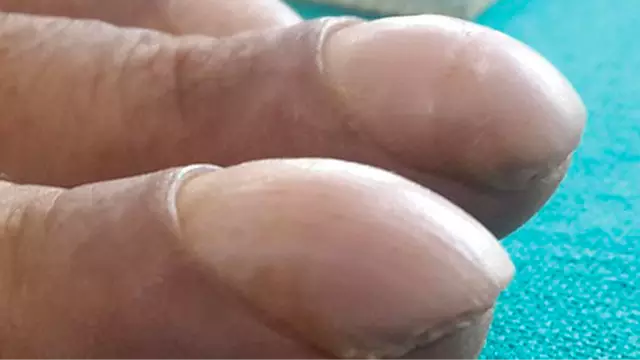
- The tip of your finger becomes rounder or bulbous, almost like a “drumstick.”
- The normal angle between your nail and cuticle flattens; your nail may curve more.
- Nails might feel soft, “spongy,” or seem less attached.
- The fingertips might feel warm or appear red.
- Clubbing may begin in just one or two nails (often on thumbs or index fingers) and gradually spread.
(Source: Cleveland Clinic) Cleveland Clinic+1 - You can try the Schamroth test (also called the “diamond window test”): place your index nails from both hands back-to-back. Normally, a small diamond-shaped gap appears between the nail beds. If the gap is gone, it might hint at clubbing. Wikipedia+2straightanursingstudent.com+2
Why Does Clubbing Happen?
Clubbing isn’t a disease on its own — it’s a signal. Many cases are linked to chronic, low oxygen levels in the blood (hypoxemia). Cleveland Clinic+2Cleveland Clinic+2 Some possible causes include:
- Lung conditions: lung cancer (especially non-small cell), interstitial lung disease, bronchiectasis, chronic infections. Medical News Today+4CHEST Journal+4Merck Manuals+4
- Heart & circulatory diseases: congenital heart defects, chronic heart disease, abnormalities that reduce oxygen delivery. Wikipedia+2Merck Manuals+2
- Liver or gastrointestinal conditions: cirrhosis, inflammatory bowel disease, malabsorption syndromes. Mesothelioma Vets+3Cleveland Clinic+3Wikipedia+3
- Thyroid disease (especially hyperthyroidism), or even hereditary (familial) clubbing in rare cases. Cleveland Clinic+2Wikipedia+2
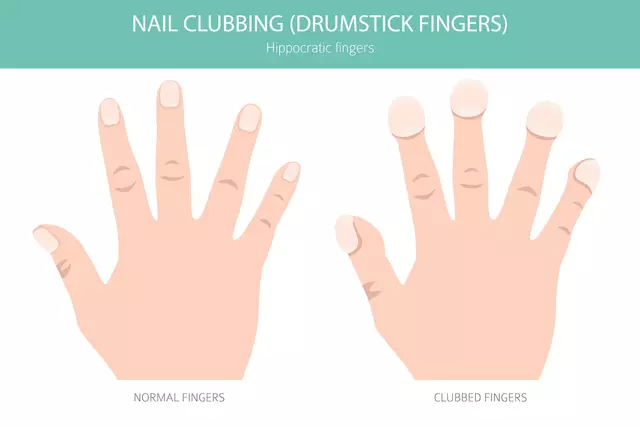
What clubbing looks like (Getty Stock Image)
Interestingly, while lung cancer is a major cause of clubbing in many clinical discussions, only about 5–15% of people with lung cancer develop obvious clubbing. Medical News Today+3NCBI+3News-Medical+3 Also, in patients who already have COPD (chronic obstructive pulmonary disease), the presence of clubbing may suggest another issue (like cancer or bronchiectasis) rather than COPD itself. PMC+1
What to Do If You Notice Clubbing
- Don’t panic, but take it seriously.
- See a healthcare provider — they’ll take your history, examine you, and likely order tests (chest X-ray, CT scan, blood tests) to look for possible causes. Cleveland Clinic+1
- Treat the underlying cause. In most cases, clubbing improves (or even reverses) if the root disease is addressed. Wikipedia+3Cleveland Clinic+3Cleveland Clinic+3
There’s a compelling anecdote of a man whose lung cancer was first noticed through finger clubbing—even before he experienced breathing symptoms. People.com That kind of story underscores how nails can be a surprising window into your health.
Bottom Line
Nail clubbing might just look odd, but it can sometimes be the body whispering a warning. If your fingertip shape or nails seem “off” — soft, curved, bulbous — don’t ignore it. A check-up could uncover something treatable early.
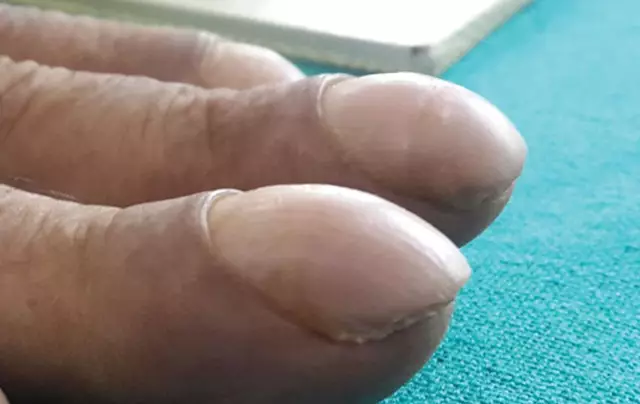
Clubbing can change the structure and appearance of your nails (Cleveland Clinic Journal of Medicine)
Internal & External Links You Can Use in the Article
- Link “Cleveland Clinic” → https://my.clevelandclinic.org/health/symptoms/24474-nail-clubbing
- Link “Mayo Clinic” → https://www.mayoclinic.org/healthy-lifestyle/adult-health/in-depth/7-fingernail-problems-not-to-ignore/art-20546860
- Link “Merck Manual on clubbing” → https://www.merckmanuals.com/home/lung-and-airway-disorders/symptoms-of-lung-disorders/clubbing