 by
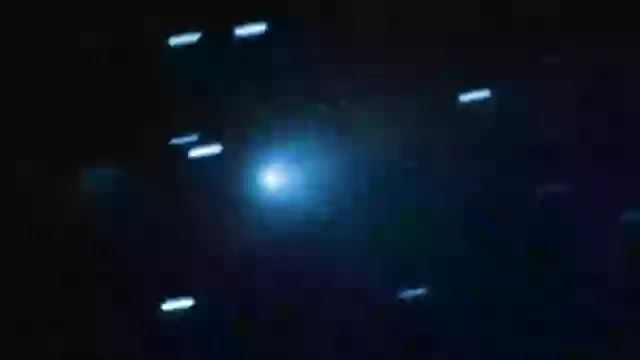
by The cosmos has delivered yet another surprise — a blazing-fast comet from outside our solar system. Meet Comet 3I/ATLAS, a mysterious space traveler that has scientists scratching their heads and stargazers in awe.
First spotted on July 1 by the Asteroid Terrestrial-impact Last Alert System (ATLAS), this comet is the third known interstellar object to enter our solar system, following the famous ‘Oumuamua (2017) and Comet 2I/Borisov (2019). But here’s the kicker — it’s reportedly twice as fast as both of them and potentially much larger.
A Speed Demon from the Stars
Using the Hubble Space Telescope, astronomers measured Comet 3I/ATLAS traveling at record-breaking speeds. While comets like the legendary 1680 and 1843 Great Comets might have been faster when heading toward the Sun, 3I/ATLAS holds its own in the “foreign visitor” category.
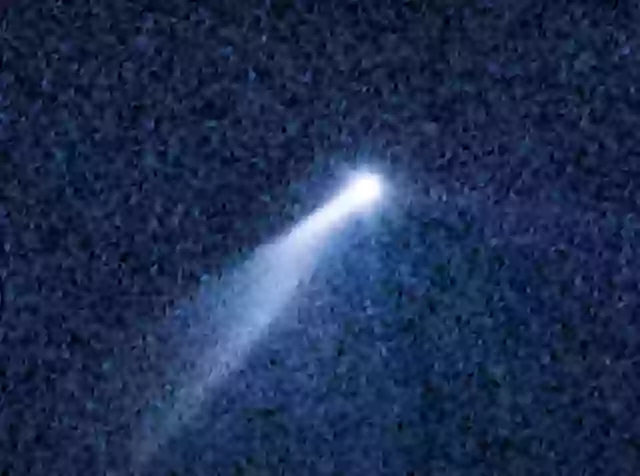
Comet 3I was discovered by the Hubble Telescope last month (NASA)
The comet’s size is still a bit of a mystery. Estimates range from 320 meters to 5.6 kilometers — that’s between three football fields and the size of a small city!
Where Did It Come From?
That’s the big question. David Jewitt, a University of California astronomer and leader of the Hubble observation team, compared the challenge to “glimpsing a rifle bullet for a thousandth of a second” — too quick to trace back to its origins.
Some scientists speculate it may have come from the thick disk of the Milky Way Galaxy, a region above and below the spiral arms. Future observations from the James Webb Space Telescope and other powerful instruments may reveal more, including how much water the comet carries.
Avi Loeb’s Alien Angle
Harvard astrophysicist Avi Loeb, known for his controversial takes, has raised eyebrows by suggesting 3I/ATLAS could be artificial. In his analysis, the comet scored a 6 out of 10 on his “Loeb Scale” for artificiality — meaning it’s more likely than not to have been engineered. Loeb cites its unusual acceleration, precise trajectory, and the lack of obvious gas emissions as reasons for his curiosity.
See It Before It’s Gone
Comet 3I/ATLAS will swing within 210 million kilometers of the Sun by October 30. It will be visible from Earth until next month, then briefly disappear before returning in December. So, grab your telescope and enjoy the show while you can — you never know when the next interstellar visitor will zoom by.
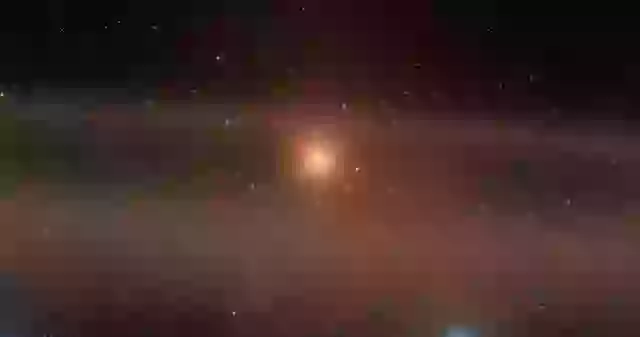
Observations will continue whilst it’s still visible in our solar system (NASA)
For the latest updates on 3I/ATLAS and other space discoveries, keep an eye on NASA’s official comet page.