 by
by Did you know nearly 42 million American women may be living with a hidden condition that can make breast cancer harder to detect? It’s called dense breasts, and while the name might sound like something you’d notice by touch, the truth is very different.
On World Dense Breast Day (September 24), Dr. Badri Konety, an oncologic surgeon and Chief Medical Officer at Astrin Biosciences, shared why breast density is such an important factor in women’s health.
What Exactly Are Dense Breasts?
Breasts are made up of fatty tissue and fibroglandular tissue. On a mammogram, fat looks dark, while fibroglandular tissue looks white. The more white you see, the denser the breast.
Here’s the tricky part: cancer tumors also appear white—so spotting cancer in dense breasts is like “trying to find a snowball in a snowstorm,” as Dr. Konety explained to the New York Post.

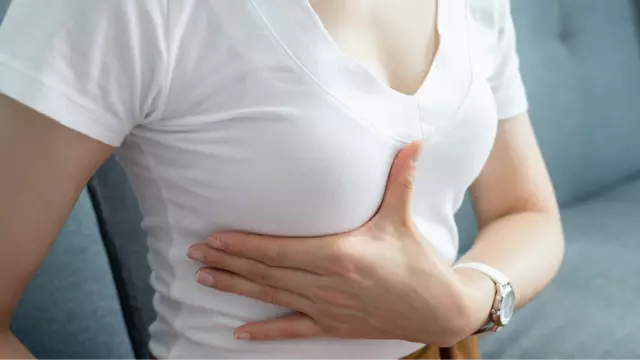
With World Dense Breast Day upon us, Dr Badri Konety has revealed how women can check a condition roughly half of all Americans in a certain age bracket have (Getty stock)
And don’t be fooled by size. “Smaller breasts can be extremely dense, while larger breasts can be mostly fatty,” Konety said. Density isn’t about size—it’s about structure.
Who’s More Likely to Have Dense Breasts?
Several factors come into play:
- Age – Younger women tend to have denser breasts until menopause.
- Genetics – Family history can increase your likelihood.
- Race – Studies show Asian women often have more dense tissue, while Black women usually have more overall tissue but less density.
Why Density Matters for Cancer Risk
Dense breasts not only hide cancer but also raise the risk of developing it—by up to six times. That’s because dense tissue contains more cells that can mutate, higher hormone levels that fuel tumor growth, and inflammatory signals that can disrupt the immune system.

Konety believes there are 42 million American women with dense breasts (Getty stock)
Even worse, mammogram accuracy drops dramatically. While they catch about 98% of cancers in fatty breasts, the rate can fall to 30% in very dense breasts.
How Do You Know If You Have Dense Breasts?
Here’s the catch—you can’t feel density. It’s only visible on a mammogram. That’s why mammogram reports now tell you if you fall into one of four categories:
- A: Mostly fatty
- B: Scattered density
- C: Heterogeneously dense
- D: Extremely dense
Most women first learn about their density after their first screening, usually recommended at age 40.
What Can You Do?
If you have dense breasts, Dr. Konety recommends talking to your doctor about personalized screening, which may include ultrasounds or MRIs (though insurance doesn’t always cover them).
There’s also hope on the horizon: Astrin Biosciences is developing a blood test that scans over 7,000 proteins to detect cancer signals even when mammograms miss them. While it’s not available yet, it could be a game-changer for millions of women.
Dr. Konety’s advice is simple: “Know your density, understand your options, and don’t settle for ‘come back next year’ if you’re worried about mammogram limits.”
👉 For more information, visit trusted resources like the American Cancer Society or DenseBreast-info.org.