 by
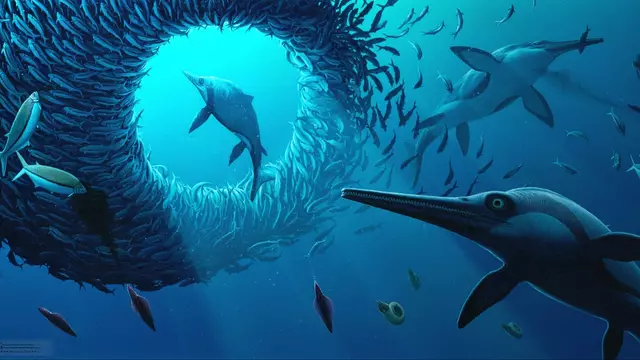
by Paleontologists have just unveiled an astonishing discovery: a brand-new species of ichthyosaur named Xiphodracon goldencapensis (colloquially the Sword Dragon of Dorset). This unique marine reptile, preserved in nearly three dimensions, comes from the UK’s famed Jurassic Coast and dates back to the Early Jurassic, specifically the Pliensbachian age (~193 to 184 million years ago). Discover Magazine+3Wikipedia+3Popular Science+3
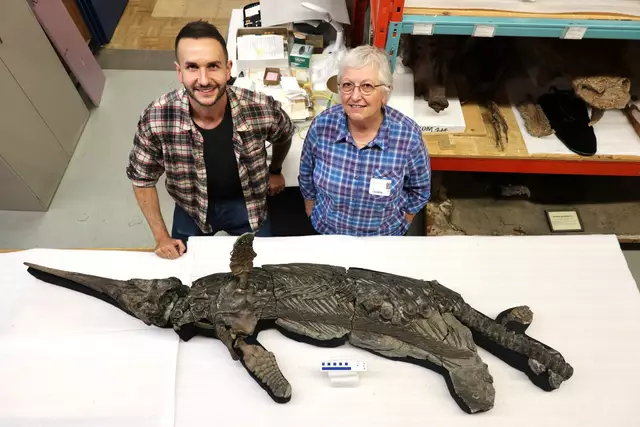
The species is known as Xiphodracon (Dean Lomax)
Despite thousands of ichthyosaur fossils being known from England, none until now came from this specific time slice — making Xiphodracon a true missing link in the ichthyosaur lineage. ABC News+3Discover Magazine+3The University of Manchester+3
Discovery & Name: From Dorset to the Lab
In 2001, Dorset fossil collector Chris Moore stumbled upon the specimen at Golden Cap, one of the coastal cliffs along the Jurassic Coast. What makes it remarkable is how well preserved it is — skull, skeleton, and even impressions of internal organs are intact. The University of Manchester+3Wikipedia+3Popular Science+3 The fossil was later sold to the Royal Ontario Museum in Canada, where it was kept until recent years, when ichthyosaur experts led by Dr. Dean Lomax began a detailed reexamination. ABC News+3Wikipedia+3Discover Magazine+3
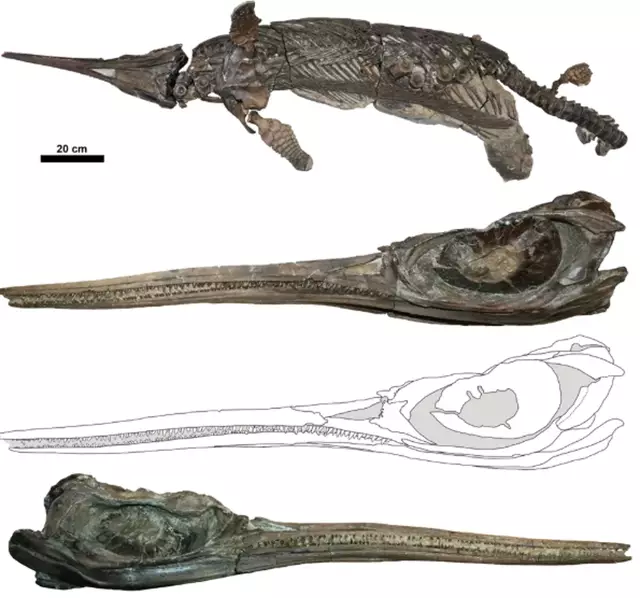
It could solve an evolutionary mystery (Dean Lomax, Judy Massare, and Erin Maxwell)
The name Xiphodracon fuses “xiphos” (Greek for “sword”) and “dracon” (Latin/Greek for “dragon”) — a nod to its long, blade-like snout and the informal “sea dragon” label often applied to ichthyosaurs. The species epithet “goldencapensis” honors the Golden Cap site where it was found. Wikipedia+2Discover Magazine+2
Anatomy & Ancient Life
This ichthyosaur likely measured about 3 meters (≈10 ft) in length. Its skull features enormous orbits (eye sockets) and a narrow, elongated snout — ideal for snatching soft prey. Indeed, stomach contents suggest it had eaten fish and squid-like creatures shortly before death. Wikipedia+3ABC News+3Discover Magazine+3
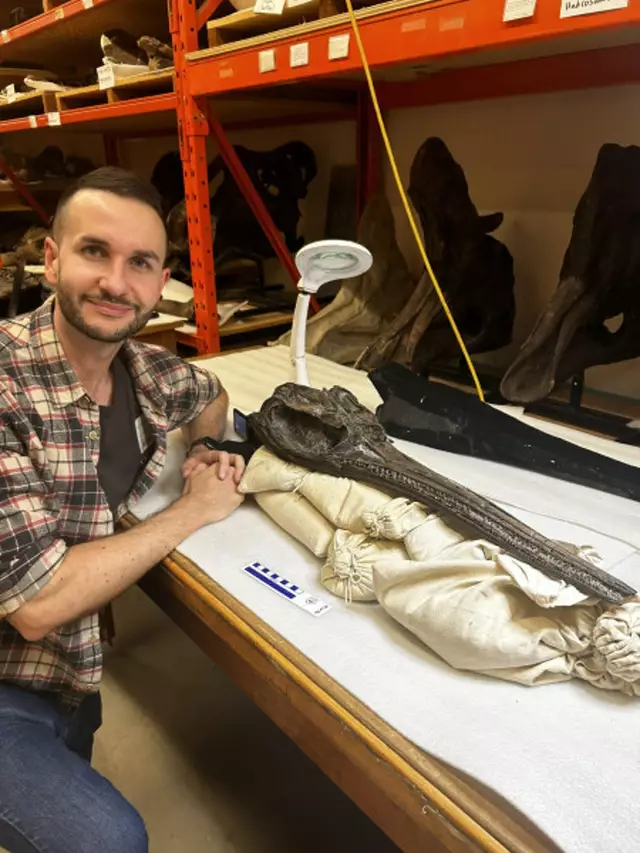
It’s a fearsome-looking thing (Dean Lomax)
One of the weirdest features is a prong-like bony structure around its nostril — something not seen in other ichthyosaurs. Wikipedia+3Popular Science+3Discover Magazine+3 The skeleton also shows signs of trauma or disease: malformed teeth/limb bones and bite traces on the skull, likely inflicted by a larger ichthyosaur, hinting at a violent death. Wikipedia+3Discover Magazine+3Popular Science+3
Why This Discovery Matters
Ichthyosaur fossils from the Pliensbachian period are extremely rare, leaving a big gap in our understanding of their evolution. Xiphodracon fits in this gap beautifully. Discover Magazine+2Popular Science+2
Phylogenetic analysis reveals that Xiphodracon is more closely related to later Early Jurassic ichthyosaurs than the earlier ones — meaning that major changes in ichthyosaur anatomy and diversity probably began earlier than scientists thought. Discover Magazine+2Wikipedia+2
The discovery helps pinpoint when the faunal turnover (when certain lineages died out and new ones emerged) occurred during the Pliensbachian. Before, that turnover was poorly resolved — now, Xiphodracon acts like a “bridge” species. Discover Magazine+2Popular Science+2
In short, this fossil is not just a cool monster — it’s a powerful clue about how the seas, predators, and life itself evolved during a little-understood chapter of Earth’s history.
Useful Links & References
- Read more in Discover Magazine on the new species: “Meet the Dolphin-Sized ‘Sword Dragon’” Discover Magazine
- LiveScience overview of the discovery: New species of Jurassic ‘sword dragon’ could help solve an evolutionary mystery Live Science
- For taxonomy and details, see the Wikipedia entry on Xiphodracon Wikipedia