 by
by The “Louvre Detective” photo went viral for looking too perfect to be real. Discover how this stylish mystery reshaped internet culture and A.I. skepticism.
The Viral Photo That Stopped the Internet
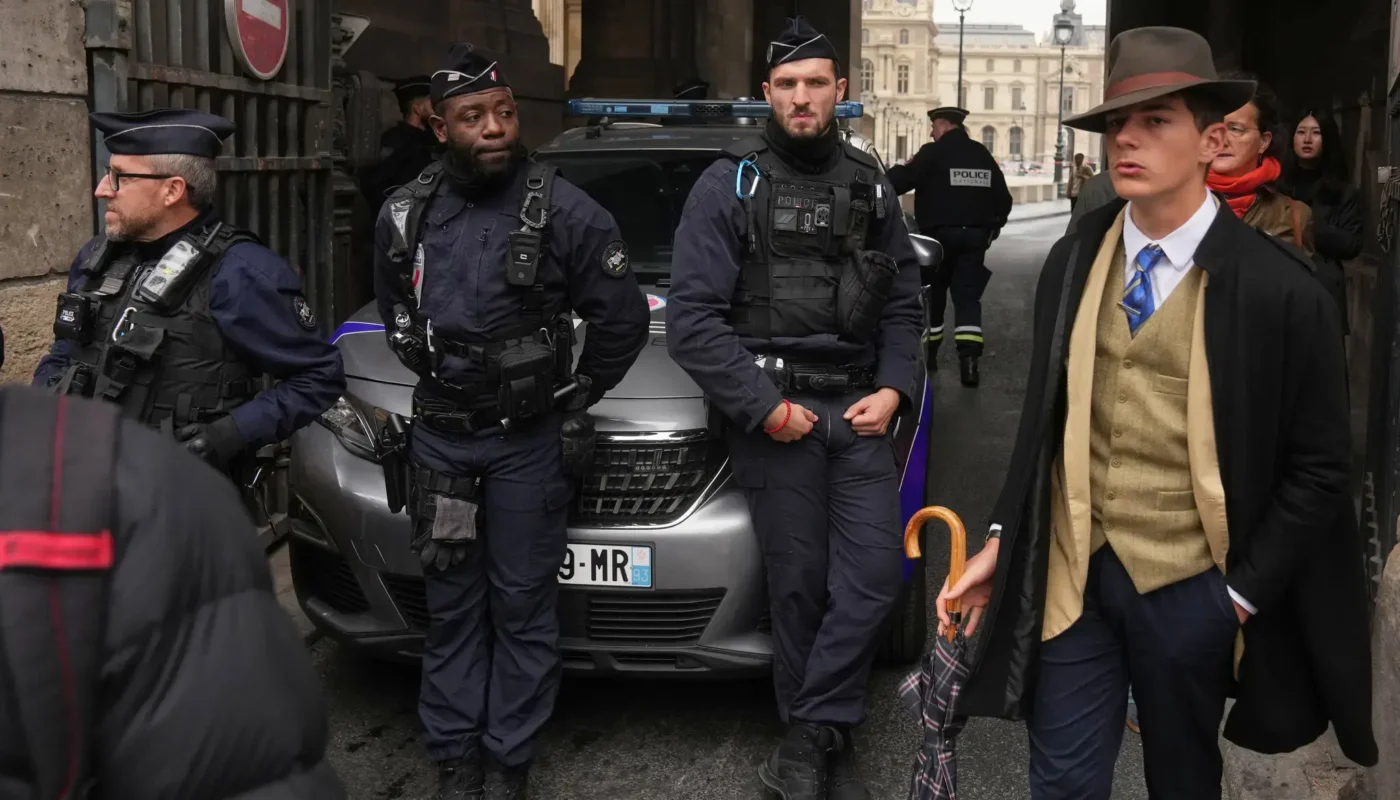
In today’s hyper-connected world, even an ordinary photo can spark a cultural wildfire. That’s exactly what happened outside the Louvre Museum in Paris after a daring jewel theft, when a photo distributed by The Associated Press caught more than just police activity.
Standing near a silver car in the museum’s courtyard was a dapper man in a fedora and trench coat — looking like he’d stepped out of a classic detective film. Before long, the image was everywhere, and the internet had crowned him the “Louvre Detective.”
The story quickly became one of those rare viral moments that fuse mystery, humor, and nostalgia all at once — proof that even in 2025, a single photograph can stop the scroll.

How the Internet Turned a Mystery into a Meme
As the image spread across X (formerly Twitter), TikTok, and Reddit, users began theorizing who the sharply dressed stranger could be. Was he a private detective? A museum insider? Or an A.I. creation cleverly inserted into reality?
One viral post joked, “You can’t solve a heist wearing a fedora unironically,” collecting over five million views and hundreds of memes. Others called for Netflix to option his life story, while some quipped that he was “just being French.”
It was the perfect storm of mystery and meme-making — a glimpse into how quickly internet culture can transform real-life events into digital entertainment spectacles.
Reality Check: Was the “Louvre Detective” Real?
Then came the twist: skepticism. Many viewers started to believe the man wasn’t real at all, pointing out his flawless skin and vintage attire. As The New York Times reported, some experts said the image looked “too cinematic to be candid.”
“There’s something about it that just feels off,” noted Matt Groh, an A.I. researcher at Northwestern University who studies how humans interpret artificial images.
But the truth turned out to be refreshingly simple — and human. The photographer, Thibault Camus of the Associated Press, confirmed the man was a real passerby, not part of the investigation. “Maybe he’s a tourist,” Camus said. “But he looked old-fashioned — like the museum itself.”
This revelation underscored a broader truth: even genuine moments now require digital verification.
What the Photo Says About Modern Culture
The “Louvre Detective” episode captures something profound about modern internet culture — our growing uncertainty about what’s real.
With advanced editing tools and A.I. models like Midjourney or Google’s Nano Banana, reality feels increasingly editable. Yet this very skepticism has given rise to what Groh calls “A.I. literacy” — an instinctive need to fact-check images before believing them.
That awareness, while healthy, also highlights our craving for authenticity in an era of illusion. Explore more technology-driven cultural insights and see how innovation continues to shape our perception of truth.
Why We Wanted Him to Be Fake
Ironically, part of what made the image viral was the wish that it wasn’t real. The internet seemed to want the man to be a movie character — a throwback detective solving a glamorous Paris heist.
In a world often dominated by bad news, the Louvre Detective offered something rare: style, mystery, and escapism. It was proof that even a passing stranger could become a symbol of collective imagination.
As our Entertainment section explores regularly, audiences today blend fantasy and reality not to deceive, but to feel something — a return to storytelling that connects us emotionally.

The Technology Factor: When Real Looks Artificial
Experts say the confusion around the photo partly stemmed from how low-resolution images spread online. According to Reuters Technology, compression can distort details enough to make authentic photos appear A.I.-generated.
Combine that with today’s photo manipulation tools, and it’s easy to see why trust in visuals is eroding. High-definition images, metadata verification, and content provenance tools are becoming essential for media credibility — especially in viral reporting.
You can read more about this evolving digital reality in our Tech & Media Trends coverage.
In the end, the Louvre Detective wasn’t an actor, a model, or an A.I. deepfake — just a sharply dressed passerby. But his viral fame revealed how fragile our relationship with digital truth has become.
Even when presented with proof, many preferred the myth. And perhaps that’s what keeps viral storytelling alive: not facts alone, but the feelings they evoke.
The man in the fedora may never know he became an internet icon, but his image will linger — as both a mystery solved and a metaphor for our times.
Disclaimer: This article is for informational and entertainment purposes only. The content reflects publicly available information and does not constitute professional or legal advice.
.CREDITS: Thibault Camus/Associated Press